What Are Full Mouth Dental Implants?
Full mouth dental implants — sometimes referred to as full arch implants, implant-supported dentures, or by the popular brand name All-on-4 or All-on-6 — replace an entire row of teeth using a small number of titanium posts surgically anchored into the jawbone. Unlike removable dentures that sit on top of the gums, implants are permanent. They function, feel, and look like natural teeth. The titanium roots fuse directly with the jawbone through a biological process called osseointegration, which is what gives implants their legendary durability and stability.
According to the American Academy of Implant Dentistry, more than 3 million Americans currently have dental implants, and that number grows by approximately 500,000 each year. The global demand for implants has driven an entire dental tourism industry — and Vietnam has emerged at the top of it.
Why Vietnam for Dental Implants?
Vietnam has transformed itself into one of Asia’s most respected destinations for high-quality, affordable dental care. Clinics in cities like Ho Chi Minh City and Hanoi are equipped with the same CBCT 3D imaging systems, CAD/CAM milling machines, and Nobel Biocare or Straumann implant systems you’d find in top practices in the United States or Germany — at a fraction of the price.
The cost difference is staggering. A full mouth All-on-4 implant procedure in the United States can run anywhere from $20,000 to $35,000 per arch. The same procedure performed by an internationally trained specialist in Vietnam typically costs between $5,000 and $10,000 per arch. All-on-6 implants, which use two additional posts for increased support, generally range from $8,000 to $15,000. For patients needing both upper and lower arches replaced, the total savings compared to Western pricing can easily exceed $30,000 to $40,000. Many Vietnamese dental specialists have completed postgraduate training in the United States, Australia, or Europe, and the country’s rigorous dental education standards continue to improve year over year.
The Patient: Before Treatment
The patient in this case study presented with a condition that is unfortunately more common than most people realize. Years of untreated decay, combined with chronic gum disease and multiple failed restorations, had left them with only a handful of heavily compromised teeth remaining. Several teeth had already been lost entirely, and those still present were either severely decayed or structurally unsound. The result was not just aesthetic — chewing had become painful and increasingly difficult, nutrition was suffering, and the patient had withdrawn from social situations due to embarrassment about their smile.
Clinically, advanced jawbone resorption was already underway. When teeth are lost and left unreplaced, the jawbone no longer receives the stimulation it needs to maintain its density, and it begins to shrink. This process, if left unchecked, eventually changes the shape of the face — causing a sunken, aged appearance around the mouth and jaw. By the time this patient arrived for their consultation, targeted bone grafting was identified as a necessary component of the overall treatment plan.
Diagnosis, Imaging, and Treatment Planning
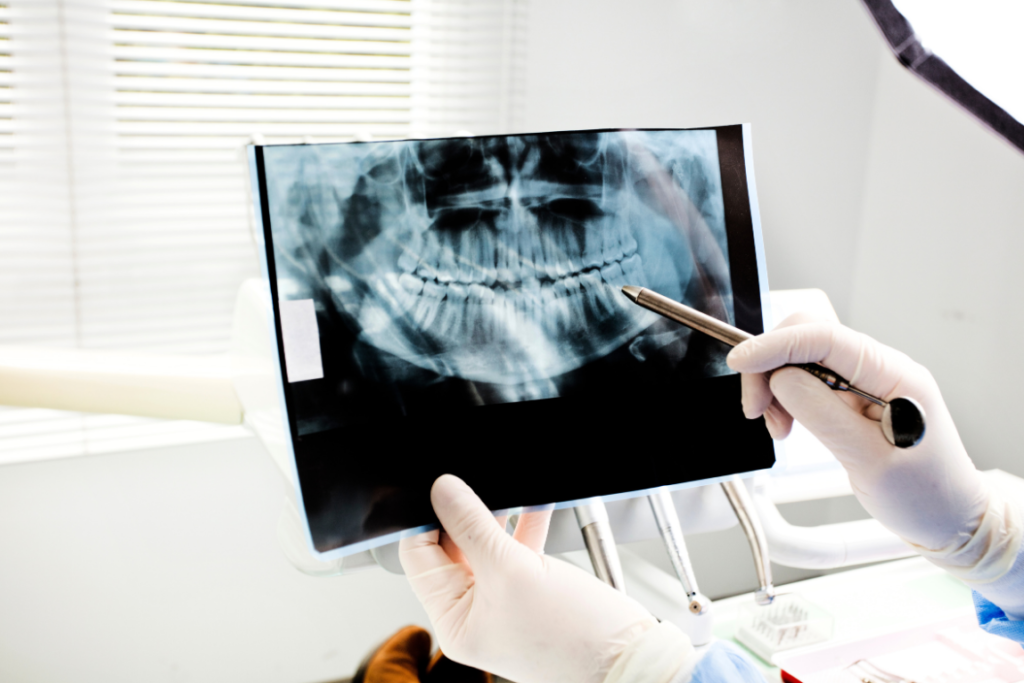
Before any treatment began, a comprehensive diagnostic workup was completed. This included full-mouth X-rays, a cone beam CT (CBCT) scan to assess three-dimensional bone volume, and a complete review of the patient’s medical history. The CBCT scan is particularly critical for implant planning because it allows the surgical team to map out exactly where implants can be placed safely, accounting for nerve pathways, sinus cavities, and areas of bone loss.
Based on the imaging results, the treatment team determined that an All-on-6 configuration would provide the most reliable long-term outcome given the degree of bone loss present. A digital treatment plan was created, simulating exact implant positions before surgery ever began. This kind of precision planning, now standard at reputable Vietnamese clinics, dramatically reduces surgical complications and shortens overall treatment time.
Phase One: Extractions and Bone Grafting
The first active phase of treatment involved the removal of all remaining non-salvageable teeth. This was performed under local anesthesia with optional sedation available for anxious patients. Following extractions, bone grafting material was placed in areas where density was insufficient to support implants. Bone grafts work by providing a scaffold that encourages the body’s own bone cells to grow and consolidate over time. Depending on the extent of grafting required, patients typically wait between two and four months before proceeding to implant placement, allowing adequate healing and bone maturation.
During this waiting period, temporary prosthetics were fitted so the patient was never without teeth and could maintain basic function and appearance throughout the process.
Phase Two: Implant Placement Surgery
Once bone healing was confirmed through follow-up imaging, the surgical placement of the titanium implants took place. Six implants were carefully inserted into the prepared sites in the jawbone — four positioned vertically and two placed at an angle to maximize contact with available bone and distribute bite forces evenly across the arch. The entire procedure was performed under local anesthesia and took approximately two to three hours. Temporary fixed teeth were attached on the same day, meaning the patient left the clinic with a functional, natural-looking smile immediately after surgery.
Titanium is the material of choice for dental implants because it is biocompatible — the body does not recognize it as foreign — and it actively encourages bone tissue to grow around and integrate with the implant surface. This osseointegration process is what makes implants fundamentally different from any other tooth replacement option available today. According to Straumann, one of the world’s leading implant manufacturers, long-term implant survival rates consistently exceed 95% at the 10-year mark when placed by trained clinicians.
Phase Three: Healing and Osseointegration
The osseointegration period lasted approximately four months for this patient. During this time, the temporary prosthetic teeth remained in place, and the patient followed a soft-food diet to avoid placing excessive stress on the healing implants. Minor swelling and discomfort in the first week were managed effectively with prescribed pain relief and anti-inflammatory medication. Follow-up appointments were scheduled at regular intervals to monitor healing and confirm that integration was progressing on track.
This phase requires patience, but it is non-negotiable. Rushing it compromises the stability of the final result. The vast majority of patients find this period manageable, particularly when supported by a responsive dental team and clear aftercare instructions.
Phase Four: Final Restoration
Once osseointegration was complete and confirmed, impressions and digital scans were taken to fabricate the final custom prosthetic. The finished arch was crafted from high-grade zirconia — a ceramic material renowned for its strength, natural translucency, and resistance to staining. The prosthetic was designed to match the patient’s facial structure, skin tone, and natural proportions, creating a result that looked completely authentic rather than artificial.
At the fitting appointment, the final restoration was secured to the implants, adjustments were made for bite alignment, and the patient’s transformation was complete.
The After: A Measurable Life Change
The results of this case were nothing short of transformative. The patient’s chewing function was fully restored, meaning proper nutrition was no longer a challenge. Speech, which had been affected by missing teeth, returned to normal. The jawbone resorption that had been progressing was halted entirely — and in some areas, reversed due to the stimulation provided by the implants. The facial structure appeared more youthful and defined. And perhaps most importantly, the patient’s confidence returned in a way that impacted every area of their daily life.
Is This the Right Treatment for You?
Full mouth dental implants are not right for every patient, but they are the right solution for far more people than many assume. Candidates do not need a full set of healthy bone — grafting can address deficiencies. They do need to be in stable general health, free from uncontrolled systemic conditions, and committed to the aftercare process. A detailed consultation, including imaging and a full clinical assessment, is the only way to determine candidacy and develop an accurate treatment plan.
If you are living with significant tooth loss and have been told your only option is removable dentures, it is worth getting a second opinion. Vietnam’s combination of clinical expertise, modern facilities, and accessible pricing has made full mouth dental implants a realistic option for patients who might otherwise never have been able to afford them. The question is not whether the treatment works — the evidence is overwhelming that it does. The question is simply whether now is the right time to take the first step.

Disclaimer: This article is for informational purposes only and does not constitute medical advice. Always consult a qualified medical professional before undergoing any surgical procedure.
Experience Seamless Care in Vietnam
Want a smile transformation like this one? Get a personalized treatment plan and cost estimate for full mouth dental implants in Vietnam.
RELATED POSTS
Sinus Lift for Dental Implants in Vietnam
Dental Care in Vietnam
Dental Care in VietnamWhat International Patients Actually Need to Know Before Booking Vietnam has quietly become one of the most compelling dental tourism destinations in the world — not because of aggressive marketing, but because…

Bone Graft for Dental Implants in Vietnam: A Comprehensive Guide