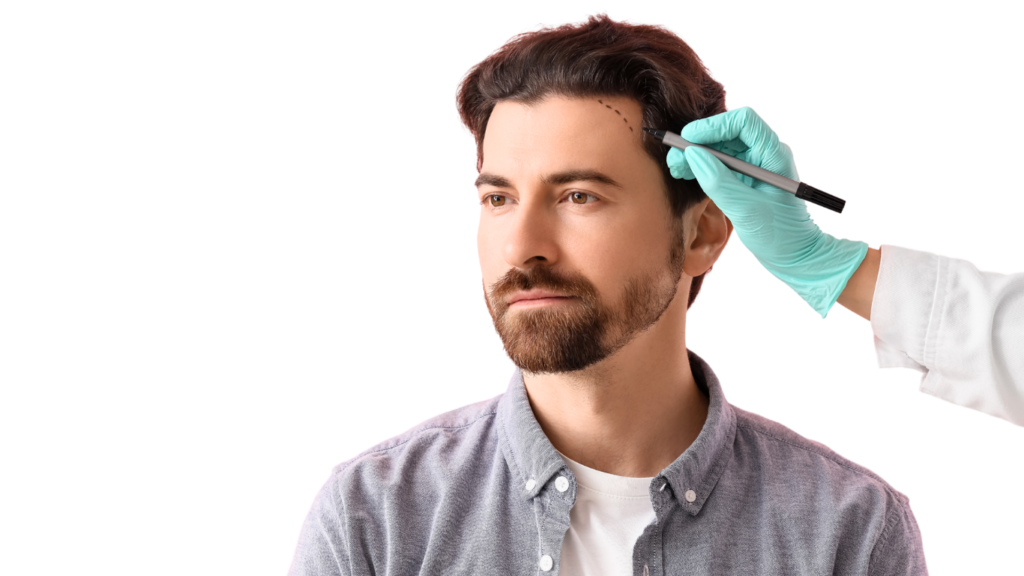
What Actually Happens During a Hair Transplant Procedure
Understanding what the procedure involves helps set realistic expectations and reduces anxiety about traveling abroad for surgery. A hair transplant is an outpatient procedure, meaning you arrive at the clinic, have the surgery, and leave the same day. There is no hospital admission, no general anesthesia, and no overnight stay required.
On the day of the procedure, you’ll have a pre-operative consultation where the surgeon maps out your hairline design and confirms the number of grafts to be extracted. This conversation matters — it’s your last opportunity to ask questions, review the plan, and make sure you and the surgeon are aligned on the expected outcome. The scalp is then cleaned and local anesthesia is administered to both the donor area and the recipient area. The anesthesia injections are the most uncomfortable part of the entire process for most patients. Once the scalp is numb, the procedure itself is essentially painless.
In an FUE procedure, the surgeon uses a micro-punch tool — typically 0.7 to 1.0 millimeters in diameter — to extract individual follicular units from the donor zone, which is usually the back and sides of the scalp where hair is genetically resistant to DHT, the hormone responsible for pattern baldness. These follicles are harvested one by one and placed in a chilled holding solution to preserve their viability while extraction continues. The number of grafts extracted in a single session typically ranges from 1,500 to 3,500, though mega-sessions of 4,000 or more grafts are performed in some cases for patients with significant hair loss.
Once extraction is complete, the surgeon creates tiny recipient sites — small incisions in the thinning or bald areas — using a blade or needle. The angle, depth, and density of these incisions determine the natural appearance of the final result. This is one of the most technically demanding parts of the procedure and one of the clearest differentiators between an experienced surgeon and an inexperienced one. Grafts are then implanted into each recipient site, either manually or using an implanter pen device, which offers greater control over angle and depth.
The total procedure time is typically six to eight hours depending on graft count, and most clinics allow patients to watch television, listen to music, or rest during the process. You leave the clinic the same day with post-operative care instructions, a mild painkiller prescription if needed, and a follow-up protocol. Initial scabbing in the recipient area resolves within seven to ten days. The transplanted hairs will shed within two to four weeks — this is normal and expected. New growth begins to emerge around the three to four month mark, with the majority of final density visible by nine to twelve months.
Understanding FUE: The Gold Standard in Hair Transplantation
The dominant technique used in Vietnam and globally today is FUE, or Follicular Unit Extraction. In FUE, individual hair follicles are extracted one by one from the donor area (typically the back and sides of the scalp) and implanted into areas of thinning or baldness. The procedure leaves no linear scar, has a faster recovery time than the older FUT (Follicular Unit Transplantation) strip method, and produces natural-looking results when performed correctly.
A high-quality FUE procedure in Vietnam uses the same micro-punch extraction tools and implantation techniques as clinics in Beverly Hills or New York. The procedure takes six to eight hours depending on the number of grafts, and most patients are back to normal daily activity within three to five days. Full results — meaning visible new hair density — take 9 to 12 months to fully develop as transplanted follicles go through natural growth cycles.
The American Academy of Dermatology notes that hair transplant surgery works best for people with pattern baldness (androgenetic alopecia) and that results depend heavily on the surgeon’s skill in creating a natural hairline and maximizing graft survival during the extraction and implantation process.
What to Look for in a Hair Transplant Surgeon in Vietnam
Not every clinic in Vietnam is equal, and doing your due diligence before committing to a surgeon is essential. The most important metric to ask about is graft survival rate — the percentage of transplanted follicles that successfully establish and produce hair. A skilled surgeon will achieve a graft survival rate of 90 to 95 percent or higher. A less experienced or less careful surgeon may produce rates significantly lower, which means thinner results and wasted money regardless of how cheap the procedure was.
You should also look for a surgeon with experience performing at least 1,000 procedures. Ask to see before-and-after photos specifically for patients with a similar hair loss pattern and donor density to yours. Pay attention to hairline design — does it look natural and age-appropriate, or does it appear overly straight or artificially dense? The hairline is the most visible element of a hair transplant, and poor design is one of the most common complaints from patients who are unhappy with their results.
Be cautious of clinics that push an unusually high number of grafts without a thorough assessment of your donor supply. Over-harvesting the donor area can leave it permanently depleted, limiting your options for future procedures if needed. A trustworthy surgeon will give you an honest assessment of how many grafts are realistic and achievable — and won’t promise outcomes beyond what your donor area can support.
Ask specifically whether the surgeon performs the entire extraction and implantation personally, or whether technicians handle the majority of the work. In many high-volume clinics globally, technicians perform a significant portion of the procedure. This is not necessarily a red flag, but you should know exactly what the surgeon’s hands-on involvement is before you proceed.
Risks, Safety Considerations, and How to Minimize Them
Hair transplant surgery is widely considered one of the safer elective surgical procedures available, but like any medical intervention, it carries real risks that deserve honest discussion — especially when you’re planning to have the procedure in another country.
The most common side effects are minor and temporary. Swelling of the forehead and around the eyes is normal in the first two to three days after surgery and resolves on its own. Mild itching in the donor and recipient areas occurs as healing progresses. Temporary numbness or reduced sensation in the scalp can last several weeks. Some patients experience small pimple-like cysts in the recipient area a few months after surgery as new hairs push through the skin — these are benign and usually resolve without treatment.
More significant risks are less common but worth understanding. Infection is possible in any surgical procedure, though it is rare in hair transplantation when proper sterile technique is used and post-operative hygiene instructions are followed. Your surgeon will typically prescribe a short course of antibiotics as a preventive measure. Scarring in the donor area can occur, particularly if too many grafts are extracted from a concentrated zone — this is called overharvesting, and it is one of the strongest arguments for choosing a conservative, experienced surgeon over one who promises an unrealistically high graft count. Shock loss — temporary shedding of existing native hair in and around the transplant area — can occur and is alarming when it happens, but is almost always temporary and resolves as those follicles re-enter their growth cycle.
The most significant risk specific to medical tourism is the challenge of managing complications from a distance. Serious complications are rare, but if one occurs after you’ve returned home, you will need to seek care from a local dermatologist or surgeon who may be unfamiliar with your procedure. This is not insurmountable — hair transplant complications are well understood by dermatologists globally — but it does mean you should have a clear plan before you travel. Identify a local dermatologist or hair restoration specialist you can contact if needed, and make sure your Vietnam clinic provides detailed surgical notes and photographs you can share with any provider you see at home.
Choosing the right clinic dramatically reduces your risk profile. Verify that the clinic operates in a licensed medical facility with proper sterilization protocols. Ask whether the surgeon is a member of the International Society of Hair Restoration Surgery (ISHRS), which maintains ethical and technical standards for practitioners globally. Read patient reviews specifically looking for how the clinic handled complications or concerns — a clinic’s responsiveness when something goes wrong is as revealing as its results when everything goes right.
If you have any underlying health conditions — bleeding disorders, autoimmune conditions, a history of keloid scarring, or active skin conditions on the scalp — discuss these thoroughly with your surgeon before proceeding. These factors don’t necessarily rule out a hair transplant, but they may affect candidacy, technique, or post-operative care requirements. A surgeon who dismisses your medical history or rushes through the consultation is a surgeon to avoid, regardless of how impressive their before-and-after photos look.
The honest summary is this: for the vast majority of healthy candidates undergoing the procedure at a reputable clinic, a hair transplant in Vietnam carries a risk profile that is comparable to having it done anywhere else in the world. The risks are real, they are manageable, and they are significantly reduced by choosing your surgeon carefully and following post-operative instructions precisely.
Why Hair Transplants Work Particularly Well as a Medical Tourism Procedure
Not every surgical procedure is a good candidate for medical tourism. Some require extended recovery periods abroad, multiple follow-up visits, or carry complication rates that make proximity to your home surgeon important. Hair transplants are different.
Recovery is short. The physical downtime is three to five days, meaning you can schedule a week in Vietnam, have the procedure on day two or three, recover at your hotel, and fly home within the week. There are no drains, no casts, no extended wound care. Mild swelling and redness in the recipient area typically resolve within a week.
Follow-up care is straightforward and works well via telemedicine. Hair growth progress is evaluated visually — you send photos to your surgeon at the one-month, three-month, six-month, and twelve-month marks. There’s nothing about post-operative hair transplant monitoring that requires an in-person visit. As long as you have a point of contact at your clinic who is responsive via email or video call, follow-up from the other side of the world is entirely manageable.
Complication rates are low. Serious complications from hair transplant surgery — infection, significant scarring, necrosis — are rare when the procedure is performed in a clean clinical environment with proper sterile technique. The overwhelming majority of patients experience nothing more than mild swelling and temporary numbness in the donor area.
How Much Does a Hair Transplant Cost in Vietnam vs. the USA?
The cost difference is dramatic. In the United States, a hair transplant typically costs between $8,000 and $15,000 depending on the number of grafts, the technique used, and the clinic’s location. In Vietnam, the same procedure — performed with the same FUE (Follicular Unit Extraction) technique, the same equipment, and comparable surgical skill — costs between $2,000 and $5,000. That’s a savings of 50 to 70 percent.
For someone considering hair restoration, that gap is the difference between having the procedure this year or waiting a decade. It’s not a marginal discount. It’s the kind of savings that makes an international flight, a week in a hotel, and a full surgical procedure still come out significantly cheaper than staying home.
To put it in perspective: even after factoring in round-trip airfare from the US to Vietnam (typically $800 to $1,400), accommodation for one week (roughly $300 to $700 at a quality hotel in Ho Chi Minh City or Hanoi), and all incidental travel costs, you are still likely to save $5,000 or more compared to having the procedure done domestically.
Why Vietnam Has Become a Top Destination for Hair Transplants
Vietnam’s medical tourism industry has grown substantially over the past decade. The country has invested in modern hospital infrastructure, and a number of clinics in Ho Chi Minh City and Hanoi have trained surgeons who perform hundreds — sometimes thousands — of hair transplant procedures per year. High procedure volume matters in hair transplantation. A surgeon who performs three to five procedures per day develops a level of technical precision that a lower-volume US clinic simply cannot match on pure repetition alone.
Vietnam also benefits from significantly lower operating costs, which is the primary reason prices are lower — not a reduction in quality of care or materials. The anesthetics, the FUE punch tools, the graft storage solutions, and the post-operative protocols are largely the same as what you’d find in a US clinic. According to the International Society of Hair Restoration Surgery (ISHRS), graft survival rate is the single most important predictor of a successful hair transplant outcome — and that comes down to surgeon technique, not geography.
Planning Your Medical Journey
International patients typically require seven to ten days for their complete treatment experience. Initial consultation occurs during the first two days, followed by surgical intervention on day three. Recovery and follow-up appointments occupy the remaining days of the visit.
This streamlined timeline allows patients to return home relatively quickly while ensuring adequate recovery monitoring. Many patients appreciate the opportunity to combine their medical journey with cultural exploration and relaxation in Vietnam’s beautiful settings.
Proper preparation, including understanding pre-operative instructions and post-operative care requirements, contributes to successful outcomes. Working with experienced coordinators helps international patients navigate every aspect of their treatment journey with confidence.

Disclaimer: This article is for informational purposes only and does not constitute medical advice. Always consult a qualified medical professional before undergoing any surgical procedure.
RELATED POSTS
Hair Transplant in Vietnam: What to Know Before You Go