
The Thailand question comes up in almost every conversation about surgery in Asia.
If you’re researching cosmetic procedures abroad, you’ve almost certainly landed in forums where Thailand is the established answer and Vietnam is the rising challenger. You’ve seen the Bumrungrad Hospital testimonials and the Bangkok medical tourism infrastructure that’s been building for thirty years.
You’ve also started seeing the Vietnam posts — surgeons with extraordinary portfolios, price points that make Thailand look expensive, patient accounts that are strikingly positive.
So which is it?
The honest answer is: it depends on what you’re optimizing for, and neither answer is simple.
This is the comparison that doesn’t have a financial interest in where you book.
The Context: Two Very Different Medical Tourism Histories
Thailand has been a destination for international medical tourists since the 1990s. Bangkok’s medical tourism infrastructure — patient coordinators, international hospital accreditation, English-language billing, medical tourism agencies with long track records — reflects thirty-plus years of intentional development.
Vietnam is newer to intentional international positioning, but that framing undersells what exists there. Ho Chi Minh City has a long history of training elite physicians who then returned from European and American fellowships with internationally competitive skills. The Vietnamese government officially designated medical tourism as a national economic priority in the 2020s, accelerating investment in accreditation and infrastructure.
The result: Thailand has the infrastructure lead. Vietnam has the surgeon talent and the price advantage. The gap in infrastructure is real but narrowing fast.
Cost: Vietnam Wins Clearly
This isn’t close.
| Procedure | Thailand (approximate) | Vietnam (approximate) | Savings vs Vietnam |
|---|---|---|---|
| Rhinoplasty | $2,500–$5,000 | $1,100–$2,500 | 40–60% |
| Breast augmentation | $3,500–$6,000 | $2,000–$4,000 | 30–50% |
| Liposuction (full body) | $3,000–$6,000 | $1,500–$3,500 | 40–50% |
| Facelift | $4,000–$8,000 | $2,500–$5,000 | 30–50% |
| Hair transplant (2000 grafts) | $1,500–$3,000 | $800–$2,000 | 30–50% |
| Gender-affirming (vaginoplasty) | $7,000–$15,000 | $5,000–$10,000 | 20–40% |
| Dental veneers (per tooth) | $300–$600 | $150–$300 | 40–60% |
These are approximate ranges. The highest-tier surgeons in both countries are more expensive than the averages above; the lowest tier is cheaper. But directionally: for equivalent quality, Vietnam runs 30–60% less than Thailand.
Why? Operational costs. Rent in Ho Chi Minh City vs Bangkok. Staff salaries. Administrative infrastructure. Thailand’s medical tourism industry has layers of agency fees, international accreditation overhead, and premium positioning built into its pricing. Vietnam has more of a direct-to-surgeon model.
Surgeon Quality: Comparable at the Top, Different in Distribution
Here’s a more nuanced picture than “Thailand is better.”
Thailand’s top surgeons — at places like Bumrungrad, Bangkok Hospital, Samitivej — are genuinely excellent. So is the supporting infrastructure. Anesthesia teams, nursing care, post-op monitoring, international-standard hospital facilities.
Vietnam’s top surgeons are also genuinely excellent. The rhinoplasty surgeons in Ho Chi Minh City who have trained in Korea and France and built 10-year portfolios of international cases are competitive with anyone in Bangkok. For certain procedures — particularly rhinoplasty and facial work where Vietnamese surgeons have deep expertise with Asian facial anatomy — the quality at the top tier is extraordinary.
The difference is in distribution and verification:
- Thailand’s international hospital system makes it easier to verify quality through known accreditation bodies (Joint Commission International, etc.)
- Vietnam requires more active due diligence because the credential verification process is less streamlined for international patients
For a patient willing to do the research (see our guide on vetting surgeons in Vietnam), the quality ceiling in Vietnam is the same as in Thailand. The floor — as in any market — varies.
Specialty considerations:
- Rhinoplasty and facial work: Vietnam’s surgeons, particularly those trained in Korean aesthetics, are world-class. This is arguably Vietnam’s strongest procedure category.
- Gender-affirming surgery (SRS/vaginoplasty/phalloplasty): Thailand has a decades-long reputation here. Vietnam is growing in this space but Thailand still has the depth of specialist experience. For more on gender-affirming surgical outcomes, WPATH standards of care provide internationally recognized guidelines.
- Hair transplant: Both countries are competitive; Turkey remains the dominant global destination, but both Vietnam and Thailand offer high-quality alternatives. Turkey’s dominance in hair transplants is well documented — see ISHRS global hair restoration statistics
- IVF/fertility: Vietnam is underrated here. Ho Chi Minh City has excellent fertility clinics with strong international patient infrastructure, often at lower cost than Thailand. Vietnam’s fertility clinics have drawn increasing international attention — ESHRE publishes comparative IVF success rate data for reference.
- Orthopedic surgery: Both countries have capable facilities; international standard hospitals in both cities handle complex cases.
Recovery Infrastructure: Thailand Has the Lead, Vietnam Is Catching Up
This is Thailand’s clearest advantage for the solo international patient.
Thailand’s medical tourism industry built its reputation partly on the support experience — patient liaisons, international-standard hospital rooms, English-speaking nursing staff (including overnight), post-op recovery residences, established networks of independent patient support services.
Vietnam’s equivalent infrastructure exists, but is less developed. English proficiency is high in the medical facilities and areas where international patients stay, but it’s less consistently available in nursing staff at off-hours. Independent recovery support services are newer and less established.
For the solo traveler, this matters: in Bangkok, you can rely on more of the system to support you without bespoke arrangement. In Ho Chi Minh City, you need to arrange more deliberately.
The flip side: because Vietnam’s independent support infrastructure is newer, a well-arranged concierge service in HCMC can actually provide more personalized, attentive support than the more transactional tourism pipeline in Bangkok. The difference between a patient who is one of 200 arriving that week at Bumrungrad and a patient who has a dedicated local contact in HCMC is real.

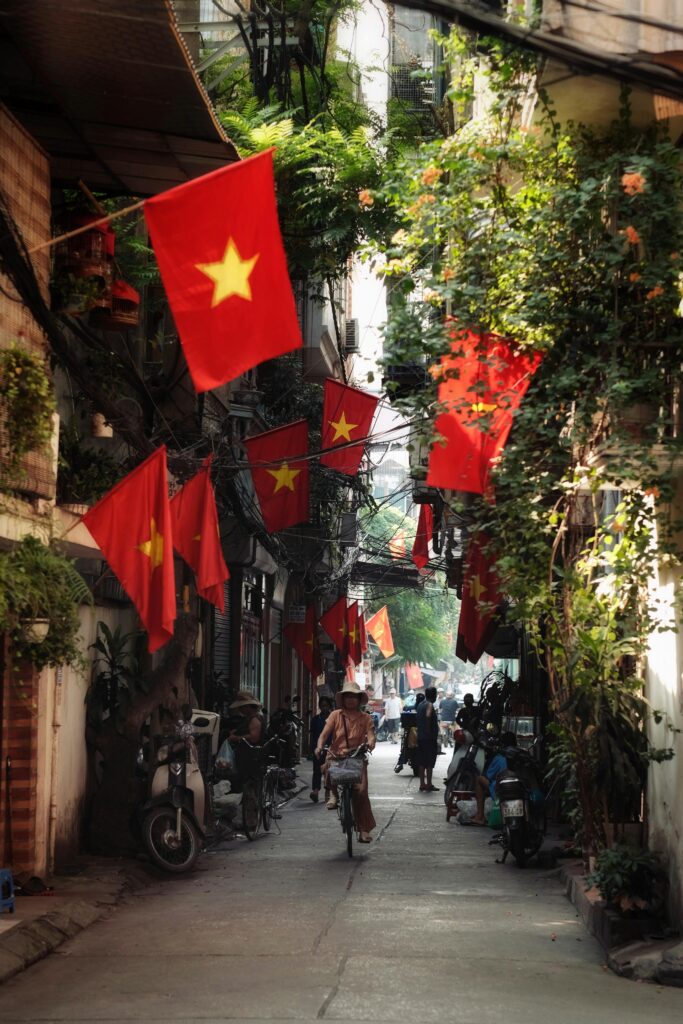
The Destination Experience: Different Flavor, Similar Appeal
Thailand’s appeal as a destination is well-established: extraordinary temples, beach access from Bangkok within a short flight, world-class food, a well-developed tourist infrastructure.
Vietnam — and Ho Chi Minh City specifically — offers a different experience that many patients find more compelling:
- The food culture in HCMC is extraordinary and genuinely recovery-friendly (pho, cháo, fresh fruit and vegetables everywhere)
- The energy of the city is electric without being overwhelming
- Less overtly tourist-industry feel — HCMC is a genuinely thriving city, not primarily organized around international visitors
- The cost of day-to-day life is lower than Bangkok (meals, transport, accommodation)
- Recovery-window activities — coffee culture, easy food delivery, massage, gentle walking in quieter neighborhoods — are excellent
Bangkok is a more internationally polished experience. HCMC is rawer, more alive, and for many patients, more interesting. Neither is objectively better; it’s a personal fit question.
Language: A Closer Call Than You’d Think
Bangkok has more widespread English in tourism and medical settings — the infrastructure has had longer to adapt.
Ho Chi Minh City has strong English in medical facilities and in the neighborhoods where international patients typically stay. The language gap becomes real at the edges: overnight nursing staff, pharmacies off-hours, transportation. This is addressable with the right local support — but it’s worth acknowledging as a real difference.
The Decision Framework
Choose THAILAND if:
- Your specific procedure has historically concentrated expertise there (certain gender-affirming procedures, some specialized plastic surgery)
- You want to minimize research burden on verifying quality (international hospital accreditation does some of that work for you)
- You have specific Thai surgeons you’ve researched and are set on
- You value a more developed solo-traveler support ecosystem without additional arrangement
Choose Vietnam if:
- Cost is a significant factor (the savings are real)
- Your procedure is rhinoplasty, facial work, dental, IVF, or body contouring — all areas where Vietnamese surgeons are highly competitive
- You’re willing to do active surgeon vetting and arrange your support deliberately
- You’re interested in a destination experience that’s more off the established medical tourism path
An honest note: For most of the procedures that drive medical tourism — rhinoplasty, breast augmentation, dental, body contouring — Vietnam offers equivalent quality at meaningfully lower cost, with the caveat that the support infrastructure requires more deliberate arrangement. That’s not a reason to choose Thailand. It’s a reason to plan your Vietnam trip properly.
What About Other Countries?
South Korea is where many of Vietnam’s top surgeons trained. Korea’s cosmetic surgery industry is the global leader in certain procedures — particularly rhinoplasty and facial contouring — and the quality is extraordinary. Costs are higher than Vietnam but lower than Western countries. Language barrier is significant for non-Korean speakers without coordination support.
India (primarily Mumbai, Delhi, and Chennai) offers extremely competitive costs and internationally trained surgeons, particularly for dental and orthopedic procedures. Cosmetic surgery quality at the top tier is good; independent research is required. English is widely spoken.
Turkey dominates the global hair transplant market in volume and price. For hair transplants specifically, Turkey’s position is unmatched. For other cosmetic procedures, quality varies significantly and requires careful research.
Mexico and Colombia are popular for North American patients given proximity. Excellent surgeons exist in both countries. For patients who want to minimize travel time and time zone adjustment, these destinations have strong cases.Hair Transplant in Vietnam: What to Know Before You Go
The Bottom Line
Thailand is the established answer — more infrastructure, slightly higher cost. Vietnam is the emerging answer — better cost, competitive quality at the top tier, support infrastructure that requires deliberate arrangement. Both are better than having the same procedure at double the cost in your home country.
FAQ
Which country has more internationally accredited hospitals for medical tourism?
Thailand currently has more JCI-accredited hospitals, particularly in Bangkok. Vietnam is growing rapidly, with several hospitals in Ho Chi Minh City and Hanoi holding international accreditations — making both strong options depending on the procedure.
Is the cost difference between Vietnam and Thailand significant?
Generally, Vietnam prices are 30–60% lower than equivalent Thai facilities for similar procedures — not just 10–30%. Rhinoplasty, dental veneers, and body contouring show the largest gaps. The difference narrows for highly specialized surgeries like certain gender-affirming procedures where Thailand’s deeper specialist pool commands a premium.
Do I need a medical visa to receive treatment in Vietnam or Thailand?
Neither country requires a specific medical visa for short stays. A standard tourist visa or visa-on-arrival is sufficient for most procedure timelines. If your recovery extends beyond 30 days, check current visa extension rules for each country.
Which destination is better for combining treatment with recuperation travel?
Both offer excellent recovery environments. Thailand is well-established for post-op resort-style recovery. Vietnam’s coastal towns like Da Nang and Hoi An are increasingly popular for quieter, lower-cost recovery stays.
Is it safe to get cosmetic surgery in Vietnam as a foreign patient?
Yes — with proper research. Vietnam’s top-tier clinics in Ho Chi Minh City operate to international standards, and many surgeons hold credentials from European, Korean, or American fellowship programs. The key is vetting your surgeon and facility carefully, arranging appropriate post-op support, and not choosing based on price alone. East Bridge Care exists specifically to help international patients navigate this safely.
How long do I need to stay in Vietnam after cosmetic surgery?
It depends on the procedure. Most patients plan for a minimum of 7–14 days post-op before flying. Rhinoplasty and facial procedures typically require 10–14 days; breast augmentation and body contouring around 7–10 days. Your surgeon will advise based on your specific case, but building buffer time into your trip is always recommended.
Can I combine multiple procedures in one trip to Vietnam?
Many patients do — and the cost savings make it more financially viable than in Western countries. However, combining procedures increases surgical risk and recovery time. Always consult with your surgeon about what is safe to combine, and ensure your recovery window accounts for healing from all procedures, not just the primary one.
Disclaimer: This article is for informational purposes only and does not constitute medical advice. Always consult a qualified medical professional before undergoing any surgical procedure.
RELATED POSTS
Hot Springs in Vietnam: 2026 Mineral Healing Guide
Your Ultimate Guide to Luxury Cosmetic Surgery in Ho Chi Minh City
Your Ultimate Guide to Luxury Cosmetic Surgery in Vietnam | Ho Chi Minh CityThe human face, as a landscape, changes over time. But these days, the physical landscapes change just as fast. Consider Ho Chi…

How to Vet Cosmetic Surgeons in Vietnam

Let Us Help
East Bridge Care specializes in post-booking support for international patients in Vietnam — accommodation, nursing, transport, translation, and local contact. We know the landscape and work entirely on your behalf.