
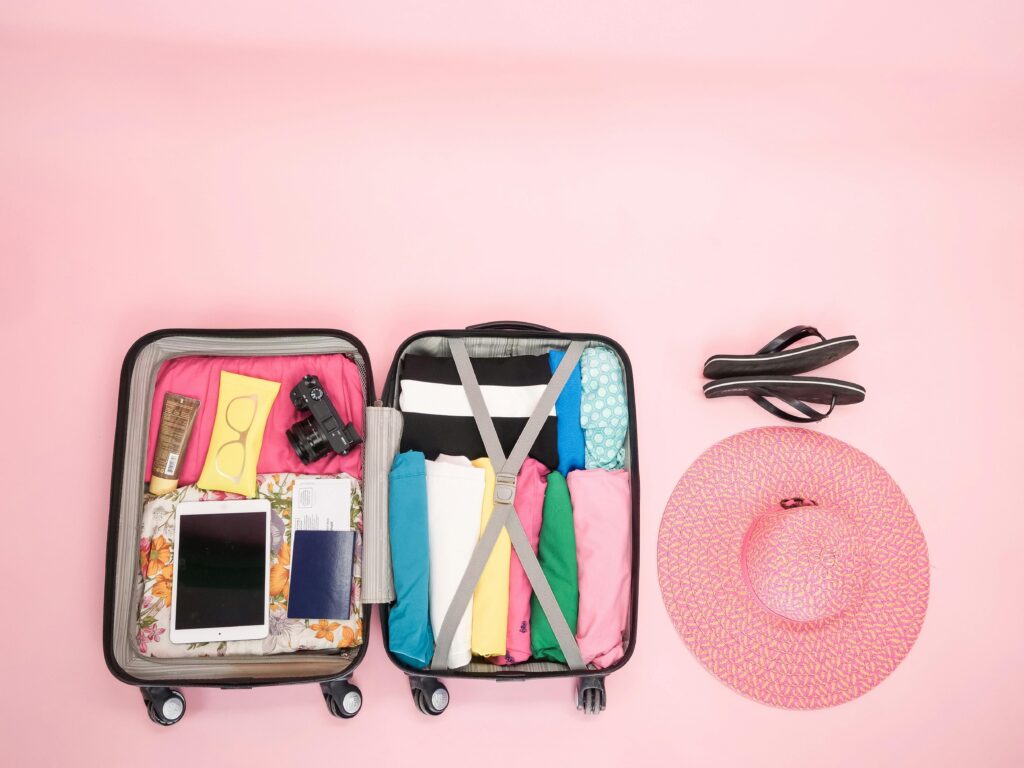
The Core Rule: Pack for Recovery, Not for Tourism
You are not going on vacation. You are going for a medical procedure in a city that happens to have excellent food and an interesting street life — but none of that is accessible in week one.
Your packing list should reflect the reality of who you’ll be for the first 5–7 days: someone largely immobile, potentially uncomfortable, needing easy access to everything, not interested in stylish outfits.
The tourism part of Vietnam is real and worth experiencing. It comes later. Pack for recovery first.
Documents and Admin (Carry-On Only)
Never put these in checked luggage.
- Passport (valid for at least 6 months beyond your travel dates)
- Visa confirmation (Vietnam offers e-visa; confirm requirements for your nationality)
- Travel insurance policy — the document itself, not just the app. Know the emergency number.
- Surgical booking confirmation — your clinic’s name, address, and contact in Vietnamese text
- Pre-op instructions from your surgeon, in hard copy
- Post-op instructions — often not given until surgery day; request them in advance
- Blood test results if completed at home and being brought for the clinic
- Medical records — any prior surgeries, allergies, current medications
- Medication list — what you take, dosage, generic names (not just brand names)
- Emergency contacts list — printed. Surgeon’s after-hours line, local contact, person at home
Clothing: Less Is More, Front-Opening Is Everything
Universal rules:
- Nothing that goes over your head if you’re having any facial or breast procedure
- Loose fits only — no waistbands, no tight sleeves
- Fabrics that don’t irritate: soft cotton, modal, bamboo
- Dark colors for the first week (bruising, drainage, and general messiness)
What to pack:
- 5–7 sets of loose, front-opening pajamas or a button-front robe — you’ll live in these
- Button-front or zip-front tops (3–4)
- Loose drawstring pants or joggers (3–4)
- Loose slip-on shoes or slides — no laces (bending down post-abdominal procedure is not happening)
- Light cardigan or zip-up for clinic appointments and air-conditioned spaces
- One slightly presentable outfit for days 7+ when you start moving around more
What to leave home:
- Anything that requires effort to put on
- Anything tight around the waist, chest, or face
- High heels, anything formal
- New or stiff clothing (wear-washed only)
Recovery Supplies: Procedure-Specific
All Procedures
- Arnica gel (topical) — reduces bruising; apply post-clearance from surgeon
- Arnica tablets or bromelain supplement — discuss with surgeon whether to start pre-op
- Saline wound rinse — for wound cleaning post-op
- Gauze pads and medical tape
- Alcohol-free antibacterial wipes
- Small basin for soaking/bathing if needed
- Thermometer — a fever spike is worth knowing about immediately
- Basic first aid kit: sterile dressings, medical tape, antiseptic cream
Rhinoplasty
- Saline nasal spray (preservative-free) — your surgeon will specify; buy before you go
- Drip pads (small adhesive pads for under-nose drainage) — usually provided but bring extras
- Travel pillow (neck pillow) for sleeping elevated
- Button-front clothing only — absolutely nothing over the head
Breast Augmentation / Chest Procedures
- Front-clasping soft bra or surgical bra — confirm your surgeon’s specifications before purchasing
- Button or zip-front tops only
- Sleeping wedge or extra pillows to stay elevated
- No underwire for weeks post-op (surgeon will advise when)
Liposuction / Body Contouring / Tummy Tuck
- Compression garments — confirm with surgeon whether the clinic provides or you bring
- If bringing: make sure you know your correct size post-procedure (difficult pre-op)
- Loose, high-waisted loose bottoms for the non-garment periods
- Lymphatic drainage support — your concierge or clinic can recommend a local provider
Hair Transplant
- Nothing tight on the head (no hats for several days — surgeon will advise)
- Travel pillow that allows you to sleep in a specific position
- Gentle, pH-balanced shampoo — surgeon will specify brand or type
- Spray bottle for misting the scalp as directed
Dental Procedures
- Soft foods list pre-confirmed
- Sensitivity toothpaste
- Soft-bristled toothbrush
- Dental wax (for any temporary crowns)
- Avoid very hot or cold liquids immediately post-procedure
Eye Procedures (Blepharoplasty)
- Sunglasses — large-framed, UV-protective
- Eye drops as specified by surgeon
- No screens for 24–48 hours (plan audiobooks, podcasts, downloaded audio content)
- Cold compress materials — gel eye mask, washcloth
Gender-Affirming Surgery
- Specific post-op supplies as detailed by your surgical team (dilation kit, etc.)
- Loose, non-restrictive lower-body clothing
- Compression garment per surgeon’s specification
- Extended supply of any hormone medications you’re currently on
Medications: What to Bring From Home
Your surgeon will prescribe post-operative medications in Vietnam — antibiotics, pain management, anti-inflammatories. These are generally easy to source at Vietnamese pharmacies at low cost.
Bring from home:
- Any chronic medications you’re currently taking — bring more than enough, plus copies of prescriptions
- Any over-the-counter medications you rely on that may be hard to identify in Vietnamese
- Antihistamines (allergic reactions to medications or environment)
- Antinausea medication (OTC) — post-anesthesia nausea is common
- Basic pain relief (paracetamol/acetaminophen) for the early post-op period before Vietnamese prescriptions are filled
- Probiotics — antibiotic courses post-surgery can disrupt gut flora; probiotics help
Do not take without surgical clearance:
- Aspirin or NSAIDs (ibuprofen, naproxen) — blood-thinning effect; stop 2 weeks pre-surgery
- Vitamin E, omega-3 fatty acids, fish oil — same concern
- Blood thinners of any kind
Useful to have:
- Stool softeners — post-surgical constipation from opioid pain medications is common and uncomfortable
- Electrolyte sachets — hydration support during recovery
- Melatonin — jet lag plus surgery recovery; low-dose melatonin helps normalize sleep
Technology and Entertainment
Post-op recovery involves a lot of time in bed. Prepare for it.
- Phone charger + universal adapter (Vietnam uses Type A/B/C outlets; US plugs work without adapter)
- Portable power bank — for when you can’t reach the outlet from your bed
- Earphones/headphones — essential; noise from the street, TV, or other sounds will matter more than usual
- Downloaded content — movies, shows, audiobooks, podcasts. Assume poor wifi access in some accommodation and plan accordingly.
- Bluetooth speaker for when you don’t want to wear earphones
- Tablet or e-reader (easier than a laptop when reclining)
- Note: no screens for 24–48 hours after eye procedures. Download audiobooks and podcasts specifically for this window.
Practical Vietnam Items
- Local SIM card — get at the airport on arrival. Vietnam has excellent mobile coverage; data is very cheap. Grab app and everything else runs off it.
- Cash (Vietnamese Dong) — small amounts for pharmacies, food vendors, and situations where card payment isn’t available. Airport ATMs are reliable. Bring some USD for airport arrival.
- Small backpack or tote — for clinic appointments. Easy to manage post-op; a full suitcase shoulder bag is not.
- Reusable water bottle — hydration is critical to recovery; having water always accessible matters
- Face mask — Ho Chi Minh City has motorbike traffic; useful for outdoor walks during recovery, and for clinic visits
Comfort Items People Forget
These seem small. Post-op, they’re not.
- Extra pillows — your accommodation may not have enough. A U-shaped travel pillow is versatile.
- Eye mask — deep sleep matters; light from windows or hallways disrupts it
- White noise app or small fan — street noise in HCMC is real; a white noise baseline helps
- Lip balm — anesthesia and climate-controlled environments dry out lips badly
- Hand lotion — same issue, particularly with repeated hand-washing post-op
- Mints or hard candy — anesthesia leaves a metallic taste that persists; fresh taste helps
- Small notebook — for writing down questions for follow-up appointments when you think of them at 2am
What to Leave Behind
Absolutely don’t bring:
- Blood-thinning medications (confirm full list with your surgeon)
- Supplements you haven’t cleared with your surgeon (vitamin E, high-dose omega-3, garlic supplements)
- Expensive jewelry or valuables you’ll be anxious about
Leave at home or in hotel:
- Most of your wardrobe — you won’t wear it week one
- High heels and formal wear
- Alcohol (counterproductive to recovery and interacts with medications)
The Night Before Checklist
- [ ] All documents in carry-on: passport, visa, insurance, surgical confirmation, medical records
- [ ] Medications in carry-on (never checked)
- [ ] Recovery supplies packed and accessible (not buried in checked luggage)
- [ ] Phone charged, power bank charged
- [ ] Entertainment downloaded (don’t rely on in-flight wifi)
- [ ] Local contact and surgeon contact numbers saved
- [ ] Emergency contacts list printed
- [ ] Accommodation and clinic addresses saved in phone in Vietnamese text
- [ ] Grab app downloaded and payment method connected
- [ ] Someone at home confirmed on your check-in schedule
A Note on Checked vs. Carry-On
Carry-on:
- Everything on the documents list
- All medications
- Essential recovery supplies (first few days’ worth)
- Phone, charger, power bank
- Change of clothes for the flight
Checked:
- Bulk recovery supplies
- Clothing
- Non-essential items
The rule: if losing it would create a genuine problem for your surgery or immediate recovery, it’s carry-on.
The Return Flight Pack
Before you leave Vietnam, pack your carry-on specifically for the return journey:
- All medications and post-op supplies in easy-reach
- Compression garments on (or easily accessible) per surgeon’s flying instructions
- Travel pillow in correct position for your procedure
- Post-op documentation — medical report from surgeon for home-country follow-up if needed
- Customs considerations: medication with prescriptions, medical supplies (no issues with legitimate medical items, but keep documentation accessible)
The Night Before Checklist
The list is longer than it sounds at first. But working through it a week before departure turns it from stressful into just a checklist. Do the prep and the trip starts from a position of “everything is handled.” That feeling matters more than it sounds, at 6am post-op when the anesthesia is wearing off and you need to know that everything around you is already sorted.
East Bridge Care helps international patients in Vietnam sort the logistics of surgery abroad — including accommodation, nursing, meals, and local support.